Source tkii roller bearing housing for Mining, Ports, and Cement
Compare 22 tkii roller bearing housing options from verified Chinese suppliers. These units support mining transport, grain logistics, and cement plant operations with customizable dimensions and ISO-certified manufacturing processes.
Key considerations
Products List




Comprehensive Sourcing Guide
Strategic Sourcing Guide for TKII Roller Bearing Housing
The procurement of TKII roller bearing housing components requires a disciplined approach that balances specific technical requirements with supply chain reliability. These components are critical for maintaining operational continuity in heavy-duty environments where vibration, load, and environmental factors can compromise equipment integrity. The market for these housings is characterized by a diverse range of specifications, from standard single-piece units to complex custom assemblies. Buyers must navigate a landscape where product attributes vary significantly between listings, necessitating a rigorous verification process to ensure that the selected components meet the precise demands of the application. This guide outlines the essential factors for sourcing TKII roller bearing housings, focusing on technical specifications, compliance, cost structures, and supplier evaluation strategies based on verified industry data.
Technical Specifications and Dimensional Variability
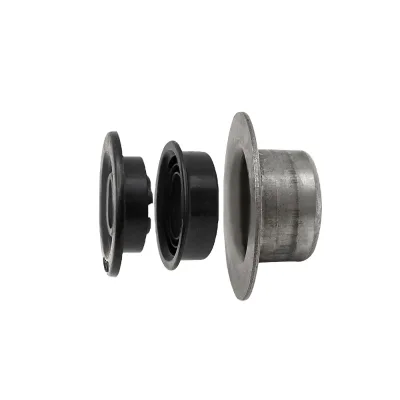
Understanding the technical specifications of TKII roller bearing housings is the foundational step in any sourcing strategy. The product data indicates a wide spectrum of dimensional configurations, which directly impacts compatibility with existing machinery. A primary observation in the current market is the variation in bore diameters and outer dimensions. Specific listings reference bore diameters of 25mm and 30mm, while others indicate shaft diameters of 20mm and 25mm. The outer dimensions are equally diverse, with bearing housing outer diameters (O.D.) listed as 83/84/85 mm for smaller units and 121/122 mm for larger variants. Tube outer diameters are also specified at 89 mm and 127 mm, suggesting that the housing design must align precisely with the shaft and tube geometry of the host equipment.
Thickness is another critical parameter that varies across the product range. Observed data points to thicknesses ranging from 2.5 mm to 3.5 mm, with specific models noting 3 mm and 2.5 mm as standard options. This variance is not merely cosmetic; it dictates the load-bearing capacity and the resistance to deformation under stress. Buyers must verify the exact thickness required for their specific load conditions, as a deviation of even 0.5 mm can affect the fit and function of the bearing assembly. Furthermore, the product models identified include designations such as TKII6204-76(72)-2.5, TKII6307-168(161)-3.0, and TKII 6204-89. These alphanumeric codes serve as unique identifiers for the housing geometry and should be cross-referenced with the original equipment manufacturer (OEM) drawings to ensure exact replacement or compatibility.
The material composition is equally significant. While some listings specify Carbon Steel, others indicate Plastic or Steel as the base material. The choice of material influences the housing's weight, corrosion resistance, and thermal properties. For applications involving high loads or abrasive environments, Carbon Steel is often the preferred choice due to its structural integrity. Conversely, plastic components may be suitable for lighter-duty applications or where weight reduction is a priority. The presence of inner seals made from ABS material in certain listings highlights the importance of sealing mechanisms in protecting the bearing from contaminants. Buyers must confirm the material specification for each component to ensure it matches the environmental conditions of the installation site.
Compliance, Certification, and Standardization
In the industrial sector, compliance with international standards and certifications is a non-negotiable aspect of procurement. The data indicates that ISO certification is a verified attribute for some suppliers of these components. This certification suggests that the manufacturing process adheres to established quality management systems, which is crucial for maintaining consistency and reliability in mass production. However, the presence of ISO certification in one listing does not guarantee that every TKII housing product meets this standard. Buyers must explicitly request proof of certification for the specific batch or model they intend to purchase, rather than assuming it applies to the entire product line.
Standardization is another key area where verification is essential. The product data references specific standards such as TKII6204 and TKII 6204-89, alongside general classifications like "Standard Parts: Yes." This distinction is vital because it separates off-the-shelf components from custom-engineered solutions. While some listings confirm that the parts are standard, others emphasize customization options, indicating that the market offers both pre-fabricated and bespoke solutions. Buyers should clarify whether the required component is a standard part or requires custom modification. If customization is needed, the tolerance levels become a critical factor. The observed tolerance of 0.02mm is a high-precision figure that may be required for tight-fitting applications, but it is not universally applied to all listings. Therefore, buyers must define their tolerance requirements clearly and verify that the supplier can consistently meet these specifications.
The origin of the products is also a relevant compliance factor. The data confirms that the products originate from China, a major hub for industrial component manufacturing. While this location offers competitive pricing and extensive supply chains, it also necessitates a thorough vetting of the supplier's export compliance and adherence to international shipping regulations. Buyers should ensure that the supplier can provide necessary documentation, including material certificates and test reports, to satisfy their internal quality assurance protocols.
Cost Drivers and Pricing Dynamics
The pricing structure for TKII roller bearing housings is influenced by several dynamic factors, including material costs, manufacturing complexity, and order volume. The observed price range in the market spans from 0.3 USD to 4.2 USD, reflecting the diversity in product specifications and quality levels. This wide range suggests that a simple price comparison based on unit cost alone is insufficient. Buyers must analyze the cost drivers to understand the value proposition of each option.
Material selection is a primary cost driver. Carbon Steel components typically command a higher price than plastic or standard steel variants due to the raw material costs and the energy-intensive processing required. Similarly, the thickness of the housing affects the material usage, with thicker components generally costing more. Manufacturing processes also play a significant role. Listings mention "Cold Stamping" and "Polishing" as surface processing techniques, as well as the use of "Multistep Progressive Dies." These processes add value by improving the precision and surface finish of the components but also increase production costs.
Order volume is another critical determinant of cost. The observed Minimum Order Quantity (MOQ) ranges from 10 to 5000 units. Suppliers often offer tiered pricing structures where the unit cost decreases as the order volume increases. For buyers with low-volume needs, the MOQ of 10 units may be accessible, but the per-unit cost will likely be higher. Conversely, large-scale procurement can leverage the lower end of the price spectrum by meeting higher MOQ thresholds. Additionally, customization options such as specific tolerances or unique packing requirements can add to the overall cost. Buyers should negotiate based on their total volume and specific requirements to optimize their procurement budget.
Typical Applications and Operational Environments
TKII roller bearing housings are designed for robust performance in demanding industrial environments. The data highlights several key application areas, including mining, port operations, cement production, and power plants. These sectors share common characteristics: heavy loads, continuous operation, and exposure to harsh conditions such as dust, moisture, and vibration. In the mining and grain transportation sectors, the housings must withstand abrasive particles and significant mechanical stress. The inclusion of "Mining Transport" and "Grain Transportation" in the application field underscores the versatility of these components in handling bulk materials.
The specific design features of the TKII housing, such as the double-acting fine blanking and multistep progressive dies, are tailored to meet the rigors of these applications. The ability to handle high loads and maintain precision under stress is essential for preventing equipment failure and minimizing downtime. In port and cement industries, where equipment operates continuously, the reliability of the bearing housing is paramount. The use of wooden case packing for these products indicates that they are often shipped in bulk to industrial sites, requiring robust packaging to prevent damage during transit.
Buyers should also consider the specific operational context when selecting a housing. For instance, the presence of inner seals made from ABS material suggests that these components are designed to protect against ingress of foreign particles, a critical feature in dusty environments like cement plants. Similarly, the variety of bore diameters and outer dimensions allows for customization to fit different machinery configurations, ensuring optimal performance across various equipment types.
Supplier Evaluation and Quality Control
Evaluating suppliers for TKII roller bearing housings requires a multi-faceted approach that goes beyond price and availability. Given the technical complexity and the critical nature of these components, buyers must assess the supplier's manufacturing capabilities, quality control systems, and track record. The availability of customization options, such as "Per Your Requirements" packing and specific model modifications, indicates that suppliers should be flexible and responsive to buyer needs. However, the presence of both "Customized" and "Non-Customized" options in the data suggests that buyers must clearly define their requirements to avoid confusion.
Quality control is a central pillar of supplier evaluation. Buyers should verify the supplier's adherence to the observed tolerances of 0.02mm and the specific thickness requirements. The use of advanced manufacturing techniques like cold stamping and polishing should be accompanied by rigorous inspection protocols to ensure that every component meets the specified standards. Certification status, such as ISO, should be validated through documentation rather than assumed. Additionally, the supplier's ability to provide test results and performance data for the specific models being sourced is crucial for confirming product reliability.
The supply chain stability is another factor to consider. With an observed MOQ range of 10 to 5000 units, buyers must ensure that the supplier can scale production to meet their demand without compromising quality. Lead times, while not explicitly detailed in the data, are a critical consideration for maintaining inventory levels and preventing production delays. Buyers should establish clear communication channels with suppliers to monitor production progress and address any potential issues promptly.
Long-Term Procurement Considerations
Sourcing TKII roller bearing housings is not a one-time transaction but a long-term strategic partnership. Buyers should focus on building relationships with suppliers who demonstrate a commitment to quality, innovation, and continuous improvement. The availability of universal components, indicated by the "Universal: Yes" attribute, suggests that some products are designed for broad compatibility, which can simplify future procurement and maintenance processes. However, the diversity in specifications means that buyers must maintain detailed records of the exact models and parameters used in their operations to ensure seamless replacement and expansion.
Sustainability and environmental compliance are increasingly important in industrial procurement. Buyers should inquire about the supplier's environmental policies, particularly regarding material sourcing and waste management. The use of wooden case packing, while effective for protection, should be evaluated for its sustainability credentials. Additionally, the potential for recycling or reusing components at the end of their lifecycle should be considered as part of the long-term procurement strategy.
Finally, buyers should plan for the evolution of their equipment and the changing landscape of industrial standards. As technology advances, the requirements for bearing housings may shift, necessitating updates to the sourcing strategy. By maintaining a flexible and informed approach, buyers can ensure that their procurement of TKII roller bearing housings remains aligned with their operational goals and industry best practices.
Comparative Analysis of Product Attributes
To facilitate informed decision-making, the following table summarizes the key attributes observed in the TKII roller bearing housing market. This comparison highlights the variability in specifications and helps buyers identify the critical factors that align with their specific needs.
| Attribute | Observed Range/Values | Relevance to Procurement |
|---|---|---|
| Material | Steel, Carbon Steel, Plastic | Determines load capacity, weight, and corrosion resistance. |
| Bore Diameter | 25mm, 30mm | Critical for shaft compatibility and fit. |
| Thickness | 2.5 mm, 3 mm, 3.5 mm | Affects structural integrity and load-bearing capability. |
| Tolerance | 0.02 mm | Essential for precision applications and assembly fit. |
| Surface Processing | Polishing | Influences friction, wear resistance, and aesthetics. |
| Certification | ISO | Indicates adherence to quality management systems. |
| Packing | Wooden Case, Per Requirements | Impacts shipping safety and storage requirements. |
| Application | Mining, Port, Cement, Power Plant | Defines the operational environment and stress conditions. |
| Customization | Available, Non-Customized | Determines flexibility in meeting specific design needs. |
This comparative analysis underscores the importance of detailed specification verification. Buyers must match their operational requirements with the specific attributes of the products they source, ensuring that the selected components provide the necessary performance and reliability for their applications. By adhering to these guidelines, buyers can navigate the complexities of the TKII roller bearing housing market with confidence and precision.
FAQs
What materials are used for TKII roller bearing housings?
Materials include carbon steel, standard steel, and plastic depending on the specific model. Carbon steel is preferred for heavy loads while plastic suits lighter applications. Buyers must verify the material specification for each component to match environmental conditions.
Which dimensions are available for these bearing housings?
Available bore diameters range from 25mm to 30mm with shaft diameters of 20mm or 25mm. Outer dimensions vary with housing O.D. options of 83/84/85 mm or 121/122 mm. Tube outer diameters are specified at 89 mm and 127 mm for different configurations.
Can I find ISO certified TKII roller bearing housing suppliers?
Yes, some listings confirm ISO certification as a verified attribute for specific suppliers. However, this certification is not guaranteed for every product listing. Buyers must explicitly request proof of certification for the specific batch or model they intend to purchase.
What is the price range for TKII roller bearing housings?
The observed price range in the market spans from 0.3 USD to 4.2 USD per unit. This variation reflects differences in material costs, manufacturing complexity, and order volume. Buyers should analyze cost drivers rather than relying solely on unit price comparisons.
How does customization affect the ordering process?
Customization is available with options for specific tolerances and unique packing requirements. Some listings offer non-customized standard parts while others allow bespoke modifications. Buyers must clearly define their requirements to ensure the supplier can meet specific tolerance levels like 0.02mm.
What are the typical applications for these housing units?
These housings are designed for mining transport, grain transportation, port operations, and cement production. They withstand heavy loads and harsh environments including dust and vibration. The design features support continuous operation in demanding industrial sectors.
What packaging options are provided for these products?
Packaging options include wooden cases, wooden packing, and per your requirements. Wooden case packing is common for bulk shipments to industrial sites to prevent transit damage. Buyers can request specific packing configurations based on their logistical needs.